



How to Play Texas Hold’em — Video Guide
Prefer a quick walkthrough? Watch the video below to learn the core rules and strategy of Texas Hold’em:
Here at Play WSOP, we’ve got the ultimate guide on how to play Texas Hold’em. Starting with the basics and moving through the hand rankings, this guide ends with some strategy tips that can help you become the next WSOP champion.
So, if you’re ready, here are the rules of Texas Hold’em, and how to get an edge in poker’s most popular game.
What is Texas Hold’em Poker?
Texas Hold’em is a poker variant that dates back to the early 20th century when players formalized the concept of community cards. Previously popular poker variants, such as Stud and Draw, are non-community card variants.
That means you’re dealt all the cards needed to make a ranked hand. In Hold’em, you only get two cards. So, the only way to make a five-card hand is to have a board. The board is made up of up to five cards that everyone can use. That’s why they’re called community cards.
Community cards are dealt in three stages: the flop, turn, and river. We’ll talk more about those stages in a moment. Before that, just know that Texas Hold’em is a poker variant that combines hole cards and community cards.
Basic Rules of Texas Hold’em
Before you can sit down and ante up, you need to know the basic rules of Texas Hold’em. The good news is the Hold’em rules are easy to learn. The main aim is to win pots. You do that in one of two ways:
- You have the best-ranked hand at showdown
- You’re the last player left in the hand (i.e., everyone else has folded)
If either of these two things happens, you win any money that’s been put into the pot.
That’s how you win pots. Getting to that pot requires cards and chips. We mentioned a moment ago that Texas Hold’em hands are broken down into stages.
Those stages are listed below. What’s important to note is that hands can end at any stage if only one person is left holding cards. So, just because a hand gets to the flop, it doesn’t mean you have to see the turn and river cards.
The Set-Up
A game starts with three things happening:
1. A player is given the dealer button. This player acts last from the flop onwards.
2. A player is forced to pay the small blind. The small blind is always immediately to the left of the dealer button. The cost is defined by the table stakes or the tournament level you’re at. In percentage terms, the small blind is always 50% of the big blind.
3. A player is forced to pay the big blind. The big blind is always immediately to the left of the small blind. If the big blind costs $10, the small blind costs $5.
Once those three things are in place, each player at the table receives two cards (aka hole cards). They’re known as hole cards because they’re only visible to the person holding them.
Stage 1: Pre-Flop
 Now comes the first round of betting. The player immediately left of the big blind goes (acts) first. They can either match the big blind (call), raise (bet more than the value of the big blind), or fold their hand.
After the first player has acted, the player to their left gets to go. If the previous player has raised, that becomes the minimum amount someone has to call. The rules of Hold’em state that you must match or exceed the last biggest bet to stay in the hand.
The action moves clockwise around the table until all players have either matched the last biggest bet or folded.
One final point to note is that play only moves to the next stage if there are at least two active players. Any time a single player remains, the hand is over.
Stage 2: The Flop
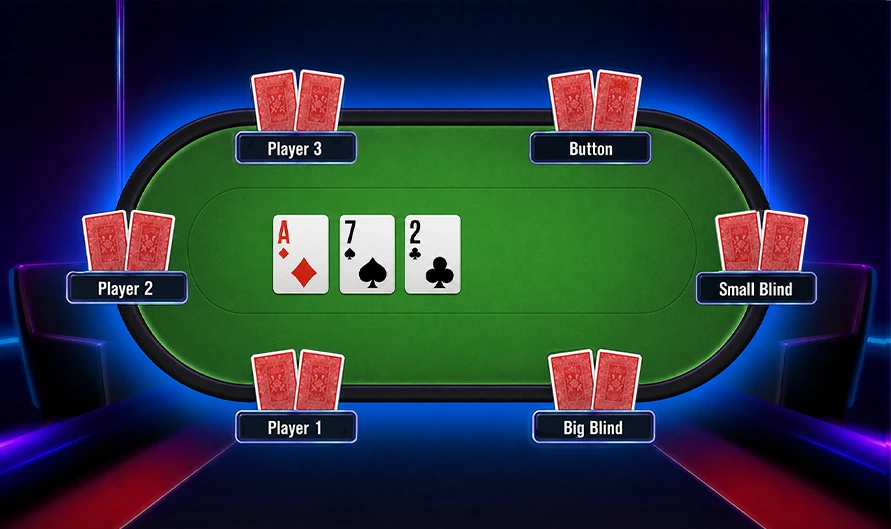 The flop is where things start to get interesting. The first three community cards are placed in the center of the table. These cards are face-up, so everyone can see them.
The reason they’re face-up is so all active players can use them in conjunction with their hole cards to make a five-card Hold’em hand.
Once the flop has been dealt, betting starts from the active player sitting closest to the small blind. So, if the small blind still has cards, they go first. If not, it’s the next active player to their left.
The player on the button acts last. As before, players can call, bet, or fold. At this stage, players can also check if there hasn’t been a bet beforehand. Checking allows you to stay in the hand but move the action along to the next player.
Once two or more players have matched the last biggest bet, check if there haven’t been any bets; the action moves to the next stage.
Stage 3: The Turn
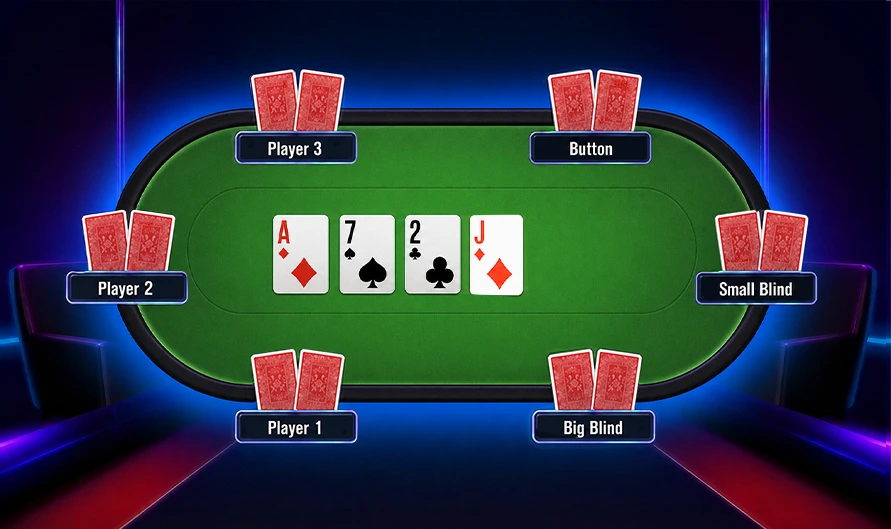 At this stage, a fourth community card (the turn) is dealt. The action proceeds as it did on the flop, with the hand only moving to Stage 4 if two or more players remain active.
Stage 4: The River
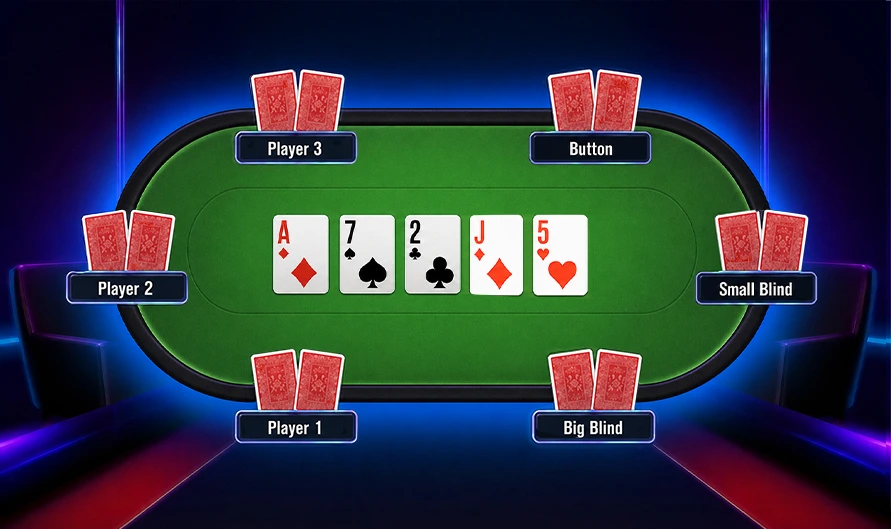 The final community card is the river. With no more cards to come, you either have a hand at this stage, or you don’t. If you don’t, there are two choices to make: bluff or fold.
If you have a ranked hand, you can either bet, raise, or call. The move you choose depends on how confident you are.
Showdown
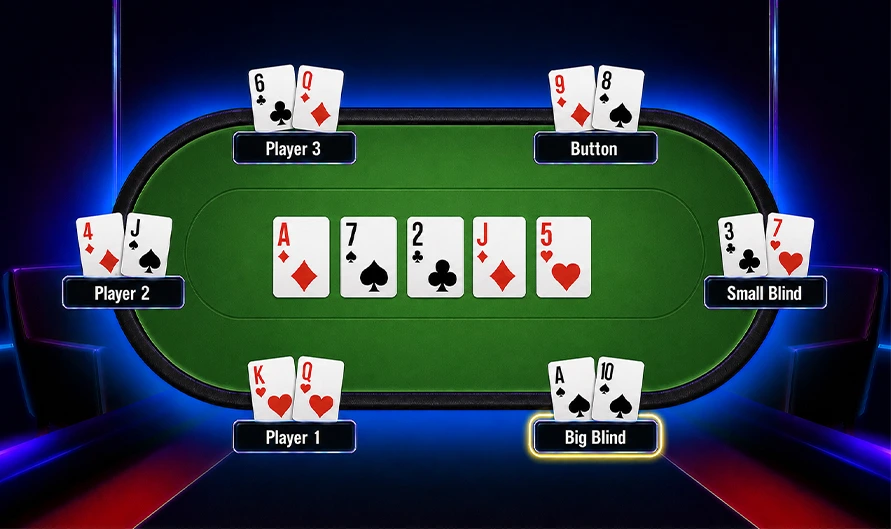 If two or more players make it through Stage 4 (either by calling the last biggest bet or checking), a showdown takes place. In this scenario, the best-ranked Texas Hold’em hand wins.
You can scroll to the next section to see how hands are ranked in Texas Hold’em.
Texas Hold’em Hands and Hand Rankings
To play Texas Hold’em, you need to know the hand rankings. 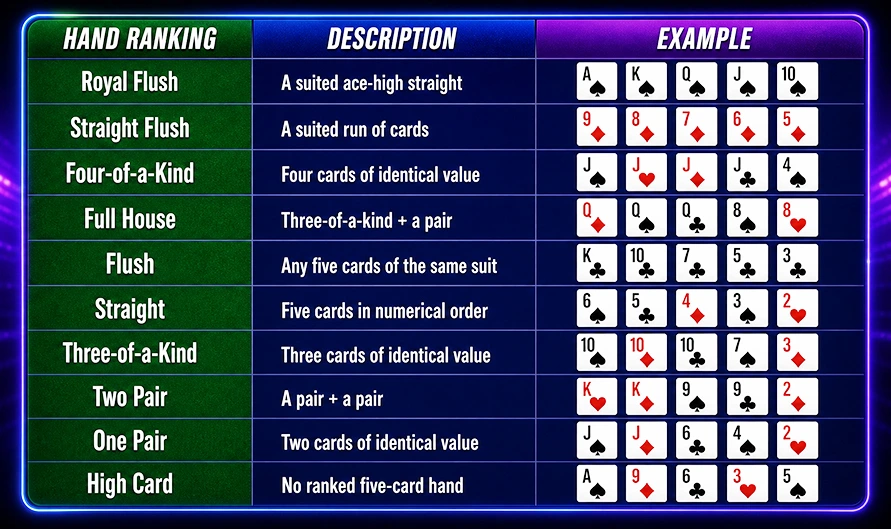 Memorize the Texas Hold’em hands shown in the table below, or print off this page so you can learn while you play. For the full ranking chart with odds and examples, see our Poker Hand Rankings guide.
| Rank | Hand Name | Short explanation |
|---|---|---|
| 01 | Royal Flush | A suited ace-high straight. |
| 02 | Straight Flush | A suited run of cards. |
| 03 | Four-of-a-Kind | Four cards of identical value. |
| 04 | Full House | Three-of-a-kind plus a pair. |
| 05 | Flush | Any five cards of the same suit. |
| 06 | Straight | Five cards in numerical order. |
| 07 | Three-of-a-Kind | Three cards of identical value. |
| 08 | Two Pair | A pair plus a pair. |
| 09 | One Pair | Two cards of identical value. |
| 10 | High Card | No ranked five-card hand. |
Playing Texas Hold’em Online
The best place to learn how to play Texas Hold’em for beginners is online. There are two ways to do this: free-play poker sites and real-money poker sites.
Free-Play Poker Sites
Free poker sites, such as Play WSOP, allow you to play poker online against other players without depositing a cent. Instead, you use virtual credits called play money.
Free poker sites also usually foster larger communities of players, making them an incredibly social place to play. For example, here at Play WSOP, we have nearly 120k players and 3 million Facebook followers.
Real-Money Poker Sites
The second way to play Texas Hold’em is by joining a real-money poker site, like GGPoker or PokerStars. Once you’ve created an account, deposit money and ante up in cash games or tournaments.
The important thing to remember is that the chips you put into the pot or use to enter tournaments have value. For example, if you bet $50 in a cash game, that’s $50 in real money. The upside, of course, is that you can win real money.
Money Matters: Why It Pays to Play Safely
Newbies are often concerned about making real-money deposits because their cash might fall into the wrong hands. That’s a perfectly natural thing to think if you’re new to online poker.
To overcome this concern, always use licensed online poker sites that use SSL encryption technology and work with reputable payment processors. If you’re playing at Play WSOP, you won’t need to worry about entering banking details because you can play for free.
And what about fairness? Don’t worry. Licensed and regulated online poker sites, including Play WSOP, use random number generators (RNGs). Each RNG is tested and certified as fair by an independent company such as iTech Labs.
Strategies for Texas Hold’em
So, you’ve learned the Texas Hold’em rules and have a pretty good idea of how to play Texas Hold’em. But you’re wondering how to get ahead.
That’s where we come in. Below, we’ll talk about a few Texas Hold’em strategies every player should understand before they place their first blind bet.
Basic Strategies
Here are a couple of basic strategies every prospective poker player should understand when trying to learn how to play poker Texas Hold’em style.
Starting Hand Selection
 The first decision you’ll make at the table is whether you’re going to play or fold. In most cases, folding is best because you should only be playing a small percentage of the hands you’re dealt.
Why? Because, on average, you won’t receive a strong starting hand. A mantra to use here is: if a hand isn’t good enough to raise, fold.
What hands are good enough to raise? In general, premium hands. A premium hand is one within the top 5%-10% of possible starting hands. A-A is the best hand in Texas Hold’em. From there, other premium hands are K-K, A-K, all pairs from 9-9 upwards, A-Q, and A-J suited. and K-K. You should also consider playing if you have any pair that’s 9-9 or higher, or A-Q or A-J.
The Importance of Position
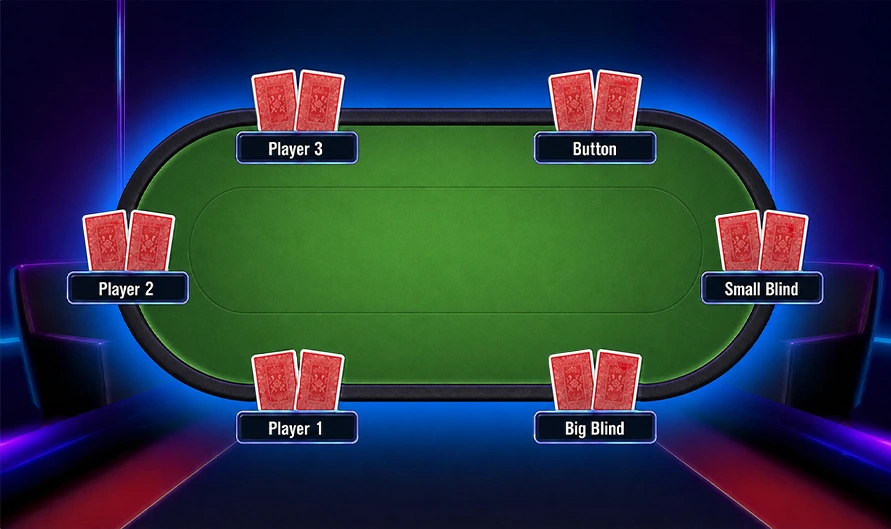
Take a look at the image below the name of each position:
The key to playing positional poker is this: the later you are to act, the better.
Being in late position allows you to observe all other players before making your decision. This means you can capitalize on the information you get and make better decisions.
Basically, it’s best to play conservatively from early positions and slightly more adventurously when you’re in late position.
Advanced Strategies
Here are some more advanced poker strategies – perfect for players who have learned how to play Texas Hold’em and want to take their game to the next level:
Reading Opponents
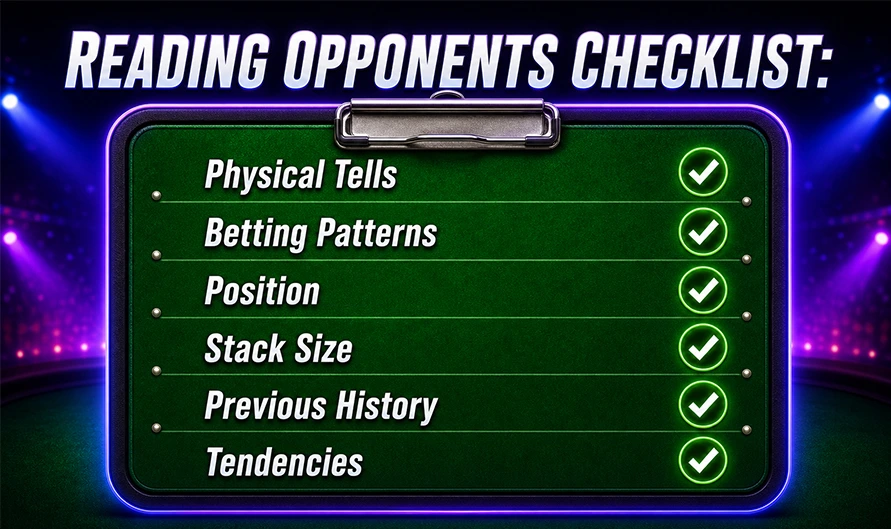 Being able to read opponents and deduce the hands they could have is very important in poker. In land-based games, you can look at players directly, analyzing everything from their facial movements to the way they hold their cards.
But remember, other players can also read you. So, pay attention to everything about your demeanor. And if you’re confident, you might even exhibit a behavior as a red herring, designed to double-bluff your opponent.
But online, the opportunities to read your opponents are fewer. Instead of looking at them, analyze how they bet.
What are their bet sizes like? Did they bet confidently from the first round of betting? How long did it take them to call or raise? After a while, you might also start understanding how aggressive they are, maybe realizing that those big bets they’re making shouldn’t be respected quite as much.
So, get used to analyzing your opponents just as much, or even more, than you analyze your own hands. As with most things, you’ll get better at reading players as you become more experienced.
The Art of Bluffing
The first strategy to remember when bluffing is this: rarely do it. You might see bluffs being made every other hand in the movies, but the best players only unleash this tactic occasionally, as it’s risky.
If you are going to bluff, you’ve got to do it at the right time. If a player looks weak – perhaps they’ve checked or only placed a low bet – then a bluff could be justified. But don’t start throwing out bluffs when other players are exhibiting strong hands, as you’re unlikely to put them off calling.
Also, it’s always best to bluff when you have an out. For example, if the Flop has just come down and you’re one card away from hitting a straight, it might be a good spot to bluff. Why? Because even if someone calls you, there’s still a chance you’ll make that straight and win the pot. For a deeper dive into structuring a believable bluff, see our full guide on how to bluff in poker.
Once you know how many outs you have, run them through our poker equity calculator to see your real chances of hitting your hand by the river.
Betting Strategies
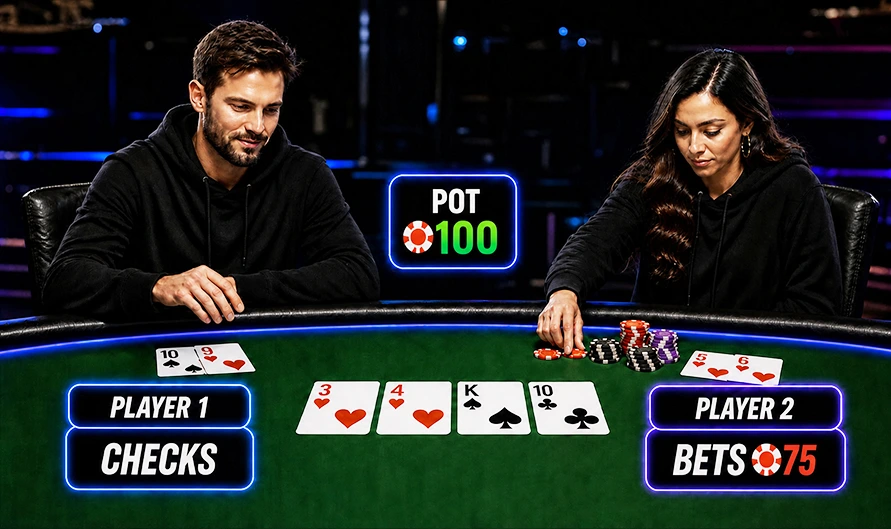 Here are a few betting strategies to understand if you want to increase your knowledge of how to play Texas Hold’em.
- Continuation Bet: If you’re the player to make a raise during the first round of betting, you almost have to take the lead in the second round, too. Not betting will show everyone you’re weak, and they’ll immediately raise and push you off the hand.
- Limit Calling: If you’re going to call, consider carefully whether you should raise instead. In some situations, such as when the previous raise is small, just calling is a sign of weakness. To look strong and force others to think twice about going against you, raise instead.
- Consider Pot Size: If there’s a tiny pot and someone makes a giant bet, consider whether it’s worth entering the pot in the first place. Weigh up risk vs reward every time you consider calling or raising a bet.
- Don’t Over Bet Suited Cards: Suited cards are two hole cards of the same suit. Some players over-value them, always thinking they could hit a flush. But in reality, suited cards – especially low suited cards like 7-2 – shouldn’t affect your decision on whether to call, raise, or fold. Sure, they’ll hit flushes sometimes, but over time, you’ll likely lose more than you win.
- Take the Initiative: Finally, when you have a good hand, take the initiative and start betting, and don’t be afraid to re-raise. By playing strong, you’ll knock weaker hands out of the pot instead of letting them limp along and potentially get lucky when the last card is revealed.
Betting with the right level of aggression is just as important as bet sizing itself. See our guide on mastering the art of aggression in poker.
Insider Tips
Before we wrap up this page, let’s look at some insider tips guaranteed to boost your quest to learn how to play poker for beginners.
- Manage Your Bankroll: Your bankroll is the money you have set aside for playing poker. Never risk all your bankroll on one table or tournament. Instead, only risk, at most, 5% of your bankroll at a time. And if you lose that, have the discipline to walk away. This ensures there’s always money left over for tomorrow.
- Avoid Common Mistakes: Some common mistakes include playing too many hands, ignoring position, not watching opponents carefully, bluffing too often, and not being prepared to cut your losses and fold when necessary.
- Stay Focused and Maintain Discipline: The longer you play, the less focused you’ll be. So, take regular breaks to maximize your time playing. Also, stick to a sensible game plan throughout. Some people will lose money and go on tilt, meaning they start playing reckless poker. This usually ends with them losing all their money. If you feel you’re on tilt, get up and walk away from the table immediately.
- Continuous Learning and Improvement: Even professionals like Daniel Negreanu are constantly learning. Take the time to understand new strategies or trends in the game, plus regularly go back and firm up on the basics. There’s always something new to learn.
Final Thoughts on Learning How to Play Texas Hold’em
So, there you have it. That’s everything you need to know to learn how to play Texas Hold’em poker. Now that you know the rules of Texas Hold’em, it’s time to hit the tables.
Our final tip is to play for free. Anteing up at Play WSOP allows you to master the basics, hone your skills, and enjoy the game without any risk. Then, if you feel ready, try some real-money Hold’em games.
Above all, take it slow and remember to have fun. Texas Hold’em is a great game, so make the most of being able to play whenever you want online.
Frequently Asked Questions: Texas Hold’em
Texas Hold’em is the most widely played form of poker, enjoyed both online and in casinos around the world. Each player receives two private “hole” cards, and five community cards are dealt face up. Players use any combination of these seven cards to make the best five-card poker hand. Its popularity comes from the blend of skill, psychology, and chance, making it both easy for beginners to learn and endlessly challenging for experienced players.
A hand of Texas Hold’em consists of these key stages:
Blinds: Two players post forced bets (small and big blind) to start the action.
Deal: Each player receives two private cards.
Pre-Flop: First betting round.
Flop: Three community cards are dealt, followed by a second betting round.
Turn: A fourth community card is dealt, followed by a third betting round.
River: The fifth and final community card is dealt, followed by the last betting round.
Showdown: Remaining players reveal their cards. The best five-card hand wins the pot.
Blinds are forced bets that rotate around the table to ensure there’s always money in the pot. The player to the left of the dealer posts the small blind, and the next player posts the big blind (usually twice the small blind). Blinds encourage action and keep the game moving.
The strongest starting hand is a pair of aces (A-A). Other premium hands include pairs of kings (K-K), queens (Q-Q), and ace-king suited (A-K of the same suit). Playing strong hands from good positions increases your chances of winning.
Each betting round allows players to:
Check: Pass the action if no bet has been made.
Bet: Place chips in the pot.
Call: Match the current highest bet.
Raise: Increase the current bet.
Fold: Discard your hand and forfeit the pot.
Betting starts with the player left of the dealer and moves clockwise.
From highest to lowest, the hand rankings are:
Royal Flush
Straight Flush
Four of a Kind
Full House
Flush
Straight
Three of a Kind
Two Pair
One Pair
High Card
If two or more players have equally strong hands at showdown, the pot is split evenly between them. For example, if both have a straight with the same high card, they share the winnings.
A bluff is a bet or raise made with a weak hand, aiming to convince opponents to fold stronger hands. Bluffing is a key skill, but should be used sparingly and only when the situation suggests your opponent is likely to fold.
Pot odds help you decide whether to call a bet based on the size of the pot and the size of the bet.
Example: If the pot is $100 and you must call $20, your pot odds are 5 to 1. Compare this to the odds of making your hand (such as completing a flush) to determine if it’s a profitable call.
Texas Hold’em combines both skill and luck. While the cards are dealt randomly, skilled players consistently make better decisions, manage risk, and read opponents, giving them a long-term edge.
Many reputable online platforms like WSOP offer free Texas Hold’em games using play money. Practicing for free lets you learn the rules, develop strategies, and build confidence without risking real money.
Losing streaks happen to everyone, even professionals. The best approach is to stay calm, avoid chasing losses, and take breaks when needed. Review your hands to spot mistakes and focus on making good decisions, not just short-term results.
Yes. The main variations are:
No Limit: Bet any amount at any time.
Limit: Bets and raises are fixed.
Pot Limit: Maximum bet is the size of the pot. All share the same basic rules but differ in betting structure.