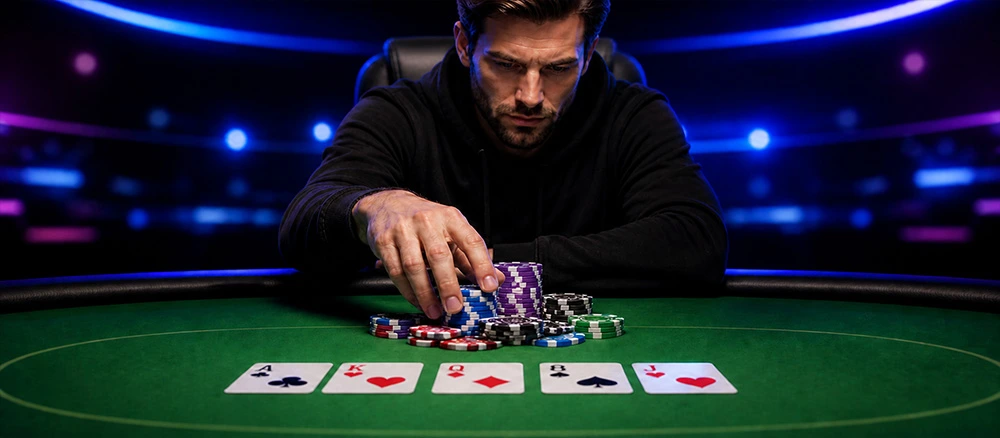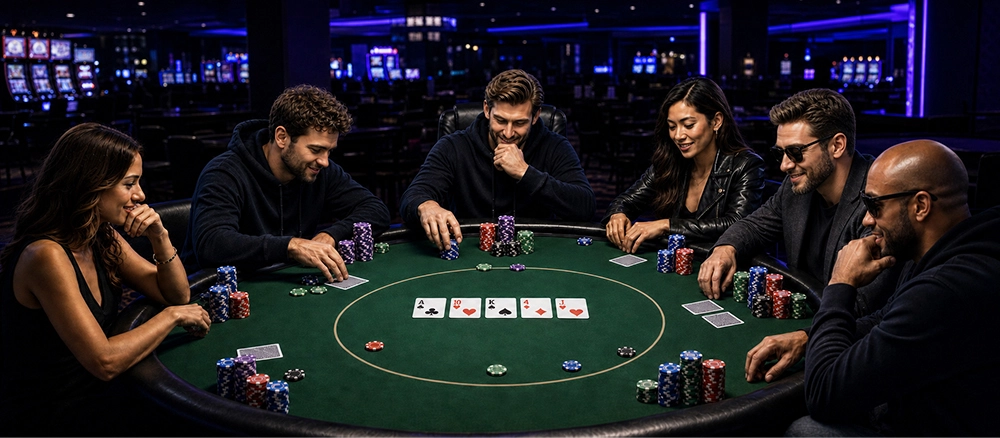
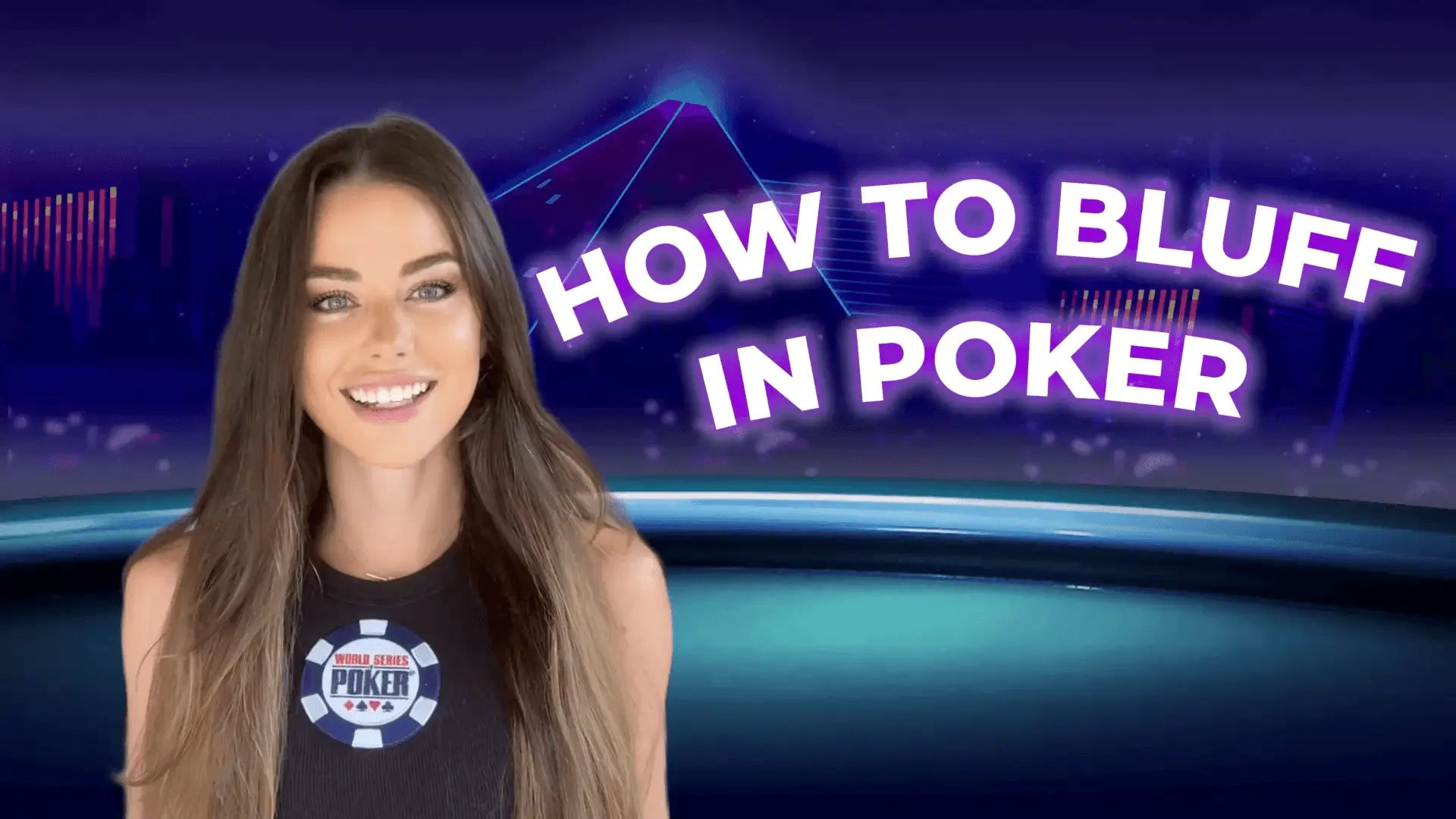



Bluffing is one of the most exciting but misunderstood moves in poker. As poker pro and PlayWSOP ambassador Samantha Abernathy points out in her latest video, bluffing is more than betting without a hand. In fact, the cards you’re holding aren’t the most important thing to consider.
Watch Samantha walk through her 3-question bluffing framework (4 min)
“A bluff is the act of winning a pot with the worst hand.”For clarity, you never know for sure if you’ve got the best or worst hand because the action closes before a showdown. That’s where your reads come in. Based on the action and your opponent’s tendencies, are you likely to have the best hand?
If not, you may be able to bluff. Whether it’s a good time to bluff depends on a variety of factors. For Abernathy, the aim isn’t to pretend you’ve got a good hand; it’s to tell a story. As she explains in the video, there are also two types of bluff in poker:
- Pure Bluffs = when you try to win the pot with no made-hand and no draw
- Semi-Bluffs = when you try to win the pot with a draw, e.g., you have a flush or a straight draw
With semi-bluffs, it’s possible to have a draw and nothing else or a draw with a made-hand.
EXAMPLE!
For example, you might have J♥ 9♥ in Hold’em, and the board is A♥ K♥ 2♣ 9♠. In this spot, you have a pair of nines and a flush draw.
Based on the action, you don’t think a pair of nines is good enough to win a showdown. So, you can turn your hand into a semi-bluff. This kind of situational aggression, betting or raising to apply pressure rather than just checking along, is central to good bluffing. See our full guide on mastering the art of aggression in poker for more.
If you win without a fight, great. If, however, your opponent calls, you could improve on the river with a flush, two pair, or three nines.
Bluffing is the Art of Telling a Story
As Abernathy explains in her video, the secret to bluffing is “telling a story your opponent is willing to believe.” You can only tell a convincing story when certain things are in place. Think of it like the plot of a movie. You need the right characters, the right situation, and the right image.
Without these things, the story falls apart. When the story falls apart, people become suspicious, and, in poker, suspicious players are more likely to call. So, to ensure she tells a convincing story, Samantha Abernathy asks these three questions:
Question #1: Does my story make sense?
Your story needs to have a beginning, a middle, and an end. To put it differently, the narrative must flow logically from one action to another. The way Abernathy ensures a bluff makes sense is to replay the action in her head. She starts before the flop and thinks through the moves made up to the present.
EXAMPLE!
Let’s say the board is Q♠ T♠ 2♥ 5♣7♠ and you’ve been betting or raising on the flop, turn, and river. In this situation, an opponent may believe you’ve got a flush because you’ve shown a willingness to bet/raise on all three streets.
Now consider the same board, but you checked the flop and turn. Betting on the river doesn’t make sense in this spot. Although you could have a flush, it’s unlikely because most people bet their draws.
So, in this situation, you’re not telling a believable story. This makes it easier for your opponent to sniff out the bluff and call with a better hand or raise as a re-bluff.
Question #2: Can this opponent fold?
According to Abernathy, not all targets are created equal. As she explains, “some players make disciplined folds, while others are simply too curious” because they “hate folding and want to see your cards.”
You should bluff a lot less against players who can’t fold. In most cases, you shouldn’t bluff these players at all. Instead, focus on value betting your good hands against curious players and calling stations (aka players who almost always call).
The players you should target are those who fold under pressure. They might be a nit (aka someone who plays too tight) or a TAG (tight aggressive players who only make moves with strong hands). These types of players are capable of folding and, as Abernathy says, “bluffing only works if your opponent is capable of folding.”
Question #3: Do I have a backup plan?
You always need a backup plan in poker. In fact, it’s often good to have plans A, B, and C. For Abernathy, this is where semi-bluffs are powerful. Here’s what she has to say about it:
- Pure bluffs usually have one way to win, i.e., your opponent folds
- Semi-bluffs give you another path to victory
As mentioned earlier, a semi-bluff is when you’ve got a draw of some sort. It can be a flush draw, an open-ended straight draw, or a gutshot. Other possible draws don’t count in this context because you don’t have enough outs.
For example, if you’ve got a pair, it’s not a semi-bluff if you’re chasing three-of-a-kind or two pair. Technically, you can draw to those hands, but you don’t have enough outs for it to be classed as a drawing hand in the context of semi-bluffing.
Semi-bluffs are Abernathy’s favorite bluffing hands because they give you two ways to win. That’s why she recommends them over pure bluffs if you’re a poker newbie. A word of caution though: missing your draw isn’t a reason to bluff.
EXAMPLE!
Let’s say you’ve bluffed with a flush draw on the flop and turn. That doesn’t mean you have to continue bluffing on the river if it doesn’t make sense.
If the river card completes a flush, you can value bet. If it doesn’t, the card that hits must contribute to a logical story. If it doesn’t, there’s nothing wrong with checking/folding.
This takes us back to the original question: does it make sense to bluff based on the previous action and the cards in play? After that, make sure your target is capable of folding. If the answer to these questions is yes, it may be OK to continue bluffing. If you answered no to either question, give up.
Key Takeaways: Three Bluffing Questions
To summarize the art of bluffing in poker, you need to tell a convincing story. To do that, you need a “why.” You establish that “why” by asking three questions:
- Does my story make sense?
- Can my opponent fold?
- Do I have a backup plan?
Answering those questions before you act sets the tone for what follows. If you can create a convincing story from the tools at your disposal, it could be a good situation to bluff.
A good bluff isn’t a guess — it’s math. Run the numbers through our poker odds calculator to confirm the bluff is actually profitable.
Final Thoughts: Ignore Results and Focus on Your Story
One thing poker teaches you is that good bluffs don’t always work and that bad bluffs can get lucky. That’s why Abernathy wants you to know that results don’t always matter. Judge bluffs on the logic of your story.
Success should be based on how well you answered Abernathy’s three questions and your story. Do this more often than not, and you’ll make better bluffs. Making better bluffs increases your chances of success.
If you stick to Abernathy’s fundamentals for bluffing, you’ll be on your way to making better decisions and, potentially, winning more pots with the worst hand.